Hey everyone...remember me? So sorry I've missed posting for several weeks. This summer has been...topsy-turvy to say the least. I was busy putting the finishing touches on GHOST HUNTRESS: THE REASON - the third book in the series. (My editor loves the story!! Whoo!!)
I just finished judging some YA entries in a contest and thought I'd share some thoughts...to tag along on what Tera posted about contests. I've judged so many contests over the years and have found a lot of patterns. I gained a lot of knowledge as an unpublished writer entering contests and I want to "pay it forward" to those of you who may be sending your stuff out to be judged.

Here are the things I’ve discovered as a contest judge that writers can improve upon:
Don’t hold your heroine at arm’s length - this was one of the biggest problems for me as a reader. The writer had a great premise and an interesting situation, but I never really felt like I knew the heroine. It seems writers can be more generous with their secondary characters and showing their actions/reactions, but oftentimes it seemed as if the heroine was just walking along through the scenery and as a reader, I was never really set in her head. The heroine is the most important part of your book. Your reader will want to identify with her and feel that she’s walking in her shoes. Give her quirks, special features, items that let the reader know her soul and what’s deep inside her.
 Avoid long, drawn out prologues -
 General rule of thumb is a prologue should be short, serve a purpose and share information that the reader wouldn’t otherwise know from reading the story. I read one entry that had a 47 page prologue that had nothing to do with the rest of the story. On page 48 when a whole new set of characters were introduced, I felt cheated with a bait and switch. A prologue should be an introductory to the story, the characters or the situation. When a writer goes on for (in my opinion) over eight pages, it’s no longer is a prologue, but rather it’s now a chapter. Make sure whatever information you need to reveal in a prologue is more than just back story, but relevant to the overall plot.
Starting the story in the right place - Another common “mistake” I found was starting the story in the right place. Often times, the writer is chugging away, really telling a story, introducing characters and situations, but then in chapter three, it takes a totally different direction. Or, better yet, I’ll read a synopsis where it says “The story starts when heroine goes to a party...” and the party didn’t start until page 58. In these circumstances, the writer has told me, the reader, that even she knows the previous fifty some odd pages were unnecessary and pure back story or lead up. Readers want action. Drop the heroine into the poo and watch what happens. Someone at RWA-Dallas said, “Stick your heroine in a tree and start shooting at her.” It’s a “cut to the chase” sort of thing. You’ve got to pace your story so that it’s interesting and relevant and information is revealed at the proper times to keep your reader interested. If you’re writing a mystery and the dead body/suspicious event doesn’t happen or get hinted to in the first sixty pages, chances are you’re going to lose the agent or editor readers attention.
 Misspelled words
 - this is a real peeve for me as a writer and a reader and particularly as a contest judge. Typos, to me, are a bit inexcusable in this day and age. Word processing programs offer spell checks, as well as translators, thesauruses and other writing tools. Also, the Internet is a great resource with Google at your fingertips, as well as Dictionary.com. If you’re going to have your heroine ordering tiramisu for dessert, please take the time to look it up and not write it out phonetically as “tearamasue.” (Not kidding.) You lose credibility with your reader when you have such blatantly misspelled words. Sure, mistakes happen, but when you refer to a heroines “high heals,” it’s excused the first time. The second and third time it’s spelled that way, it makes the writer look lazy for not checking grammar and spelling. Also, take a refresher course in grammar if you’re having problems distinguishing between “it’s” and “its,” “to” and “too,” “you’re,” and “your” and other words. Take the time to show that you’ve done your research, proofed your work and have mastered the language.
Fully describing the story from start to finish in the synopsis - The synopsis is an important tool for you to sell your story. Once you become lucky enough and sell that first story, you’ll be able to submit proposals with a synopsis of your planned story. You need to be able to describe how the story pans out from start to finish, from the opening to the happily ever after. Many a synopsis I've read, the writer left teasers at the end. Or, if there was a mystery, it was never explained how it was solved. You want to fully describe the main thread of your plot, how it unfolds and how it is resolved. Don’t leave your reader (editor or agent) hanging because it will make them put the story aside. Get your hero and heroine’s goals, motivations and conflicts upfront in the synopsis the best you can. Always tell the ending.
 Watch your dialogue tags -
 Many of the entries seemed to either be afraid of using dialogue tags or overused them. Some would go on for pages with no “he said” or “she said” and I felt, as a reader that I was yo-yoing through the dialogue...like I was reading a screenplay. Other times, the lack of dialogue tags had me unsure of where the characters were, what they were doing or what they were feeling. Then, on the opposite extreme, I saw many instances of dialogue being “smiled” or “cried” or such things you can’t actually do with dialogue. Most of the time, simple “said” or “asked” works just fine. Don’t take away from the reading by overuse of tags.
Don’t summarize. Let the reader “hear” what’s happening - Oftentimes, I found some writers summarizing too much. Especially during crucial scenes in their manuscript. The reader wants to “hear” what’s going on. They want to share in the conversation, listening to the words, the inflection, etc. When writer summarizes too much, it sucks the action right out of the story. Action is what propels the reader forward, it’s what keeps the editor and agent turning the pages. If you summarize too much, you run the risk of the reader skimming and wondering how that particular passage is important. Use dialogue and the here and now as often as possible to convey your plot and story.
Forcing a story into the YA genre - Okay, need to climb up on the soap box a little. We all know how hot the YA genre is -- and we certainly appreciate that here at Books, Boys, Buzz! -- but not everyone should be writing YA just because it's what's selling. I read no fewer than four entries that I had previously read in other contests as romance stories or chick lit that have now been targeted for YA. To me, this is forcing a story into a genre that it wasn't originally intended. Look...we all want to sell...believe me, I know that! I tried this trick myself and it usually doesn't work. More than likely, you're taking something you've written a long time ago and just changed the characters to teenagers. It doesn't always work. If you truly want to write YA, go for something fresh...something that hasn't been done to death and something that can really showcase the YA voice. Don't force an old story into the YA slot. If I can figure it out as a contest judge...image what an editor or agent will think. Don't be afraid to be creative and put yourself out there and really enjoy writing for teens.
 Proper targeting of the contest/genre -
 When it comes to contests, take the time to fully research it and don’t just throw a manuscript in “because.” There are a lot of RWA chapter contests out there that are very specific in what they are judging: first chapter, last chapter, synopsis, query letter, sex scene, chick lit, first kiss, etc. Don’t enter a contest unless you’ve read all of the rules, understood the categories, find some use in the final judges. Don’t throw your romantic suspense into a chick lit category. If you enter a first kiss contest, make sure your characters actually kiss. Don’t put your 100K manuscript into a short contemporary category. Have some respect for the judges who will be giving their time and feedback, but who are also working with in a regimented set of rules and score sheet requirements. If your manuscript doesn’t fit a particular contest, move on to the next one. You don’t have to enter every one. Believe me, everyone involved will appreciate it.
I hope my insight as a judge is helpful for you as you’re looking to enter your manuscript(s) into contest for this new year. Always have a goal for what you’d like to get out of a contest and then do your part to make sure the judges have the most professional, well-written, best stab from you as possible. The better prepared you are as a contestant, the better the feedback will be. Good luck to you!
Hugs,
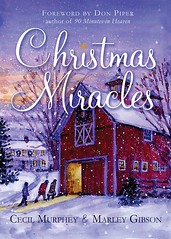
Marley = )GHOST HUNTRESS: THE AWAKENING (Available Now! Houghton Mifflin Harcourt)GHOST HUNTRESS: THE GUIDANCE (Coming September 2009, Houghton Mifflin Harcourt)GHOST HUNTRESS: THE REASON (Coming May 2010, Houghton Mifflin Harcourt)THE OTHER SIDE: A TEEN'S GUIDE TO GHOST HUNTING AND THE PARANORMAL (Coming September 2009, Houghton Mifflin Harcourt)CHRISTMAS MIRACLES (Coming October 2009, St. Martin's Press)SORORITY 101: Zeta or Omega? (Available from Puffin Books)SORORITY 101: The New Sisters (Available from Puffin Books)





 Posts
Posts

